
About Time Decay
Every option contract has an expiration date. And every day that ticks by, the option loses a little bit of value — even if the stock doesn’t move at all. This is called time decay, and it’s the single most important force working in your favor as an options seller.
What Is Time Decay?
Section titled “What Is Time Decay?”When you sell an option, you collect a premium upfront. That premium is made up of two parts:
- Intrinsic value — the amount the option is “in the money” (if any)
- Time value — the extra amount buyers pay for the possibility that the stock could move in their direction before expiration
Time value shrinks every day. The closer the option gets to expiration, the less time is left for the stock to move, so the less that possibility is worth. This daily erosion of time value is what traders call theta or time decay.
As a seller, you already have the premium. As time value evaporates, the option becomes cheaper to buy back — or it simply expires worthless. Either way, the decay works in your favor.
The Ice-Cube Metaphor
Section titled “The Ice-Cube Metaphor”Think of time value like an ice cube sitting on a counter. It starts solid, but it’s melting from the moment you set it down. You can’t stop it. You can’t reverse it. It just melts.
When you sell an option, you’re selling that ice cube. The buyer paid full price for it, and every day it gets a little smaller. By expiration, it’s gone — and you kept the cash.
For a deeper look at why this makes option selling a natural fit for income investors, see Why Sell Options?.
The Theta Decay Curve
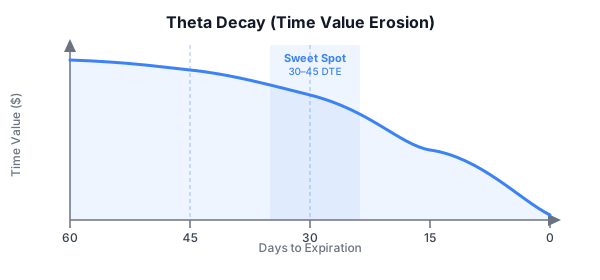
Section titled “The Theta Decay Curve”Here’s the part that matters most: time decay isn’t constant. It accelerates as expiration approaches.
An option with 60 days left might lose a few cents per day. But that same option with 10 days left could lose several times as much per day. The decay curve looks like a hockey stick — slow and gentle at first, then steep and fast near the end.
This is why many sellers target the 30–45 day range when opening positions. You’re entering right as the decay curve starts to steepen, capturing the most aggressive time value erosion without the risks that come with very short-dated contracts.
For a detailed breakdown of how to use this curve to pick expiration dates, see Choosing Strikes and Expirations.
Reading Theta on the Screener
Section titled “Reading Theta on the Screener”On the FITools screener, you’ll see a Theta Decay column in the alternatives table. It shows a dollar amount per day — for example, $2.45/day.
That number tells you roughly how much time value the option loses each trading day (per contract of 100 shares). A higher number means faster decay, which is generally good for sellers — your position is becoming profitable more quickly just from the passage of time.
A few things to keep in mind:
- Theta changes daily. The number you see is a snapshot. As expiration gets closer, daily decay increases.
- Weekends and holidays count. Theta erodes over calendar days, not just trading days. Selling on a Friday afternoon means you benefit from weekend decay.
- Theta is highest for at-the-money options. Options with strikes close to the current stock price decay fastest, because they have the most time value to lose.
How Theta Helps Option Sellers
Section titled “How Theta Helps Option Sellers”The math is simple: every day you hold a short option, time decay chips away at its value. That’s money moving from the buyer’s pocket to yours — without the stock needing to move in any particular direction.
This is the core advantage of selling options:
- You don’t need to be right about direction. The stock can stay flat and you still profit.
- Time is always on your side. Unlike buying options, where every day costs you money, selling means every day pays you.
- The effect compounds with good timing. Selling in the 30–45 DTE sweet spot maximizes the rate of decay you capture.
Understanding theta is what separates options sellers who treat it as a strategy from those who treat it as a gamble. When you know how time decay works, you can structure trades that have the odds tilted in your favor from day one.
← Back to Why Sell Options?